


Red light therapy, a buzzword that has captured the attention of health and wellness enthusiasts, traces its roots back to a revolutionary treatment by Niels Finsen, who was awarded the Nobel Prize for his success in using phototherapy. This early adoption of light therapy targeted skin infections, showing significant results that paved the way for future therapeutic innovations. Today’s red light therapy has evolved from Finsen’s methodology and the subsequent development of low-level lasers in the 1960s, which were primarily used for wound healing, pain relief, and recovery enhancement.

The transition from specialized lasers to more commonly available LED technology has played a pivotal role in the accessibility of red light therapy, leading to its widespread use in at-home devices. These devices leverage the therapeutic effects of red and near-infrared wavelengths, stimulating the body’s natural healing processes at a cellular level. By specifically targeting cytochrome c oxidase and bolstering ATP synthesis, red light therapy holds promise for improving multiple aspects of health and wellness, including skin health, energy levels, inflammation reduction, and eye health.
The growing body of evidence suggesting that red light therapy can boost overall wellbeing has not gone unnoticed in the realm of social media influencers. Numerous before and after testimonies reveal impressive outcomes, contributing to the therapy’s popularity. The scientific principles behind these results include increased energy production, heightened RNA and protein synthesis, and enhanced nitric oxide release. These mechanisms work in unison to support systemic benefits such as improvements in mood, alertness, and sleep quality.
Historical Background
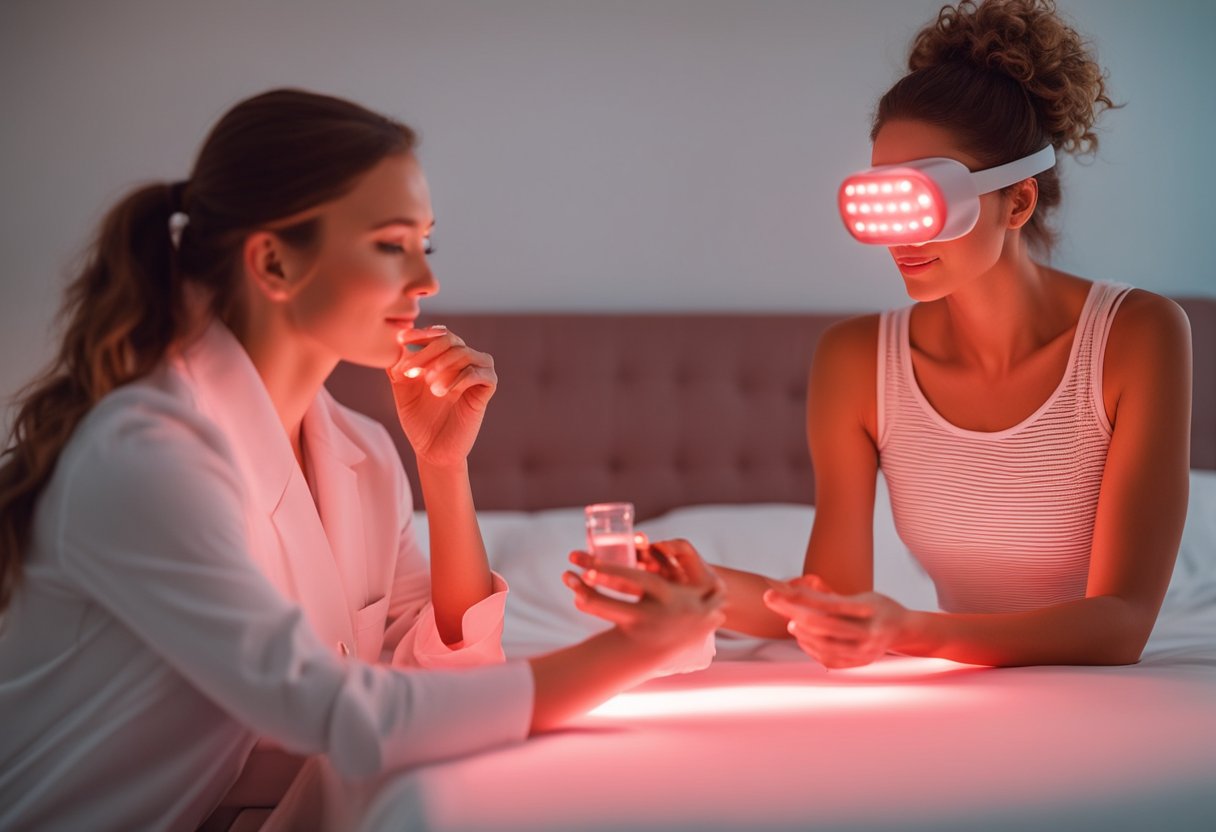
Red light therapy, an evidence-backed treatment, finds its origins in the pioneering medical advances of the early 20th century and has evolved significantly with technological innovation.
Niels Finsen’s Nobel Prize
In 1903, Niels Finsen was awarded the Nobel Prize in Physiology or Medicine for his groundbreaking work using light therapy to treat skin conditions. His work laid the foundation for phototherapy in dermatology, treating conditions like lupus vulgaris and smallpox.
Developments in Light Therapy
After the invention of low-level lasers in the 1960s, light therapy’s application broadened significantly. It went beyond treating skin infections and expanded to include wound healing, pain reduction, and aiding in recovery processes. With advances in technology, red light therapy became accessible for at-home use, changing the landscape of non-invasive treatments.
Mechanisms of Red Light Therapy

Red light therapy, also known as photobiomodulation, involves the application of specific wavelengths of red and near-infrared light to the body. It’s a process that triggers a cascade of cellular responses, including increased ATP production and reduced oxidative stress, leading to various health benefits.
Skin Health Benefits
Exposure to red light in the 630-900 nm range can enhance skin health by stimulating collagen production, which is vital for skin elasticity and strength. Clinical studies have shown that red light can help reduce wrinkles, scars, and redness, as well as improve the healing process of damaged skin.
Energy Production Enhancement
Through the absorption of red and NIR light by mitochondria, there is an increase in cellular ATP synthesis. This enhanced energy production boosts overall cellular function and vitality, which can contribute to better health and performance of bodily tissues.
Inflammation Reduction
Red light therapy has been found to reduce inflammation by decreasing pro-inflammatory cytokine production and increasing anti-inflammatory cytokines. This inflammation reduction contributes to pain relief and supports the healing process of various conditions.
Eye Health Improvement
Specific wavelengths of red light may have protective effects on eye health. Research indicates that red light therapy can improve mitochondrial function in the cells of the retina, which holds promise for treating age-related ocular disorders.
Sleep Quality Improvement
Red light therapy has been linked to improved sleep quality. The therapy may influence circadian rhythms and the production of melatonin, a sleep-regulating hormone, enhancing overall sleep patterns and quality.
Red Light Therapy Evolution
The journey of red light therapy from early medical applications to today’s diverse use has been revolutionary. This section delves into its transition from low-level lasers to LEDs, the establishment of photobiomodulation as a concept, and the significance of specific wavelengths utilized in therapy.
From Low-Level Lasers to LEDs
The advent of low-level lasers in the 1960s marked the first use of light for therapeutic healing. Initially, these lasers were groundbreaking for their efficacy in wound healing and pain relief. Over time, research revealed that LEDs (Light Emitting Diodes) with wavelengths similar to those of low-level lasers could be equally beneficial, resulting in the widespread availability of red light therapy devices for personal use.
Photobiomodulation Concept
Photobiomodulation refers to the mechanism of red light therapy. It was understood that red and near-infrared light influenced cellular function through the activation of the mitochondrial respiratory chain component cytochrome c oxidase. This effect enhances ATP (adenosine triphosphate) production, essentially fueling cellular activities and promoting healing.
Wavelength Specification
Wavelengths within the range of 630-900 nm are key in photobiomodulation, optimizing the red light’s therapeutic effects. Clinical studies have confirmed that when cells are exposed to red and near-infrared light within this spectrum, numerous health benefits, including skin rejuvenation, pain reduction, and improved recovery, are observed. This specificity in wavelength has been integral to the evolution and effectiveness of red light therapy applications.
Biological Effects of Red Light Therapy
Red light therapy plays a critical role in promoting cellular health and recovery. This section describes its impact on ATP synthesis, protection against oxidative stress, and muscle repair and recovery.
ATP Synthesis Stimulation
Red and near-infrared light are known to stimulate cytochrome c oxidase, a key component of the cellular energy production pathway. This stimulation enhances the production of ATP, or adenosine triphosphate, which is the energy currency of the cell.
Oxidative Stress Protection
Exposure to red light therapy can mitigate oxidative stress, protecting cells from damage by reducing the presence of harmful free radicals. This is essential for maintaining cellular integrity and promoting overall tissue health.
Muscle Repair and Recovery
In terms of physical rehabilitation, red light therapy has been reported to accelerate muscle repair and recovery. It increases RNA and protein synthesis, which are crucial for muscle regeneration, and heightens the release of nitric oxide that improves circulation to the affected areas.
Additional Benefits
Red light therapy extends beyond skin and bodily repair; it also has noticeable effects on mental well-being.
Mood and Alertness Improvements
Scientific studies have shown that red and near-infrared light therapy can positively impact mood and alertness. These wavelengths can help regulate circadian rhythms, which in turn improves sleep patterns and daily alertness. The therapeutic light stimulates mitochondrial function in the brain, which is integral to energy production and possibly alleviating symptoms of depression.
